Healthcare Analytics: How to Manage Your Health Data Intelligently
What is healthcare analytics and what types are there? How early screening and organising your health data help you make better health decisions.
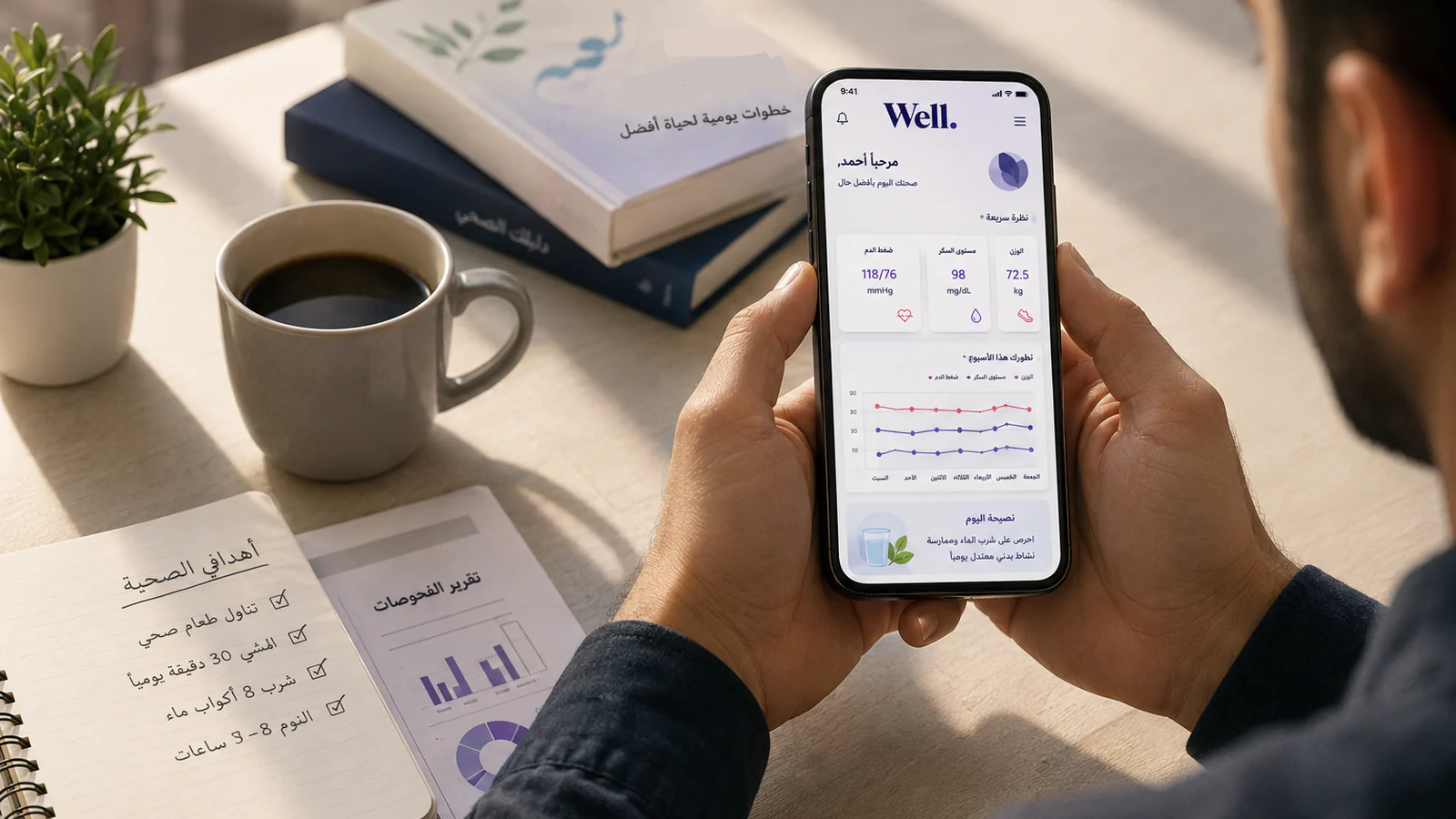
For many years, seeing a doctor was tied to a clear health problem: you feel pain or fatigue, then you look for medical care. That model matters for dealing with symptoms and illness — but prevention, early screening and regular follow-up can play an important part in catching some risk factors or health conditions at an earlier stage.
This is where healthcare analytics comes in. Measuring blood pressure, tracking blood sugar, weight, physical activity and test results are not just separate numbers; organised and followed over time, they can give a clearer picture of health changes and help both doctor and patient understand the trends.
The real value of health data appears when it is read in its proper context, connected to health history, symptoms and risk factors, and used by the doctor to make the right decision.
In this guide from Well we look at why healthcare analytics and early screening matter, why data analysis matters in public health, how home measurements can be used more effectively, and how a digital health record helps you get better care.
Please note: this article is for health education and is not a diagnosis or a substitute for a direct medical assessment. Interpreting any result or measurement needs a specialist who connects it to health history, symptoms and risk factors.
What is healthcare analytics?
Healthcare analytics means using recorded health information — test results, measurements and health indicators — to understand a person's health and follow changes and trends over time.
Health data may include:
- Blood test results.
- Blood pressure.
- Blood sugar level.
- Pulse rate.
- Weight and body mass index.
- Physical activity level.
- Sleep.
- Medications and prescriptions.
- Health history.
- The genome.
- Measurements collected by home or wearable devices.
Data analysis in healthcare aims to gather the information relevant to a case, organise it, and understand it within the appropriate medical context — to strengthen patient care and improve the efficiency of the health system.
An organised health record can help you see changes over time rather than relying on a single reading or on memory.
Traditional care versus data-informed care
| Element | Traditional healthcare | Data-informed care |
|---|---|---|
| Starting point | A symptom or complaint appears | Tracking indicators and regular screening |
| Timing of decisions | Usually when a problem exists | May start before symptoms appear, depending on risk factors |
| Data used | Information available at the time of the visit | Information accumulated over a period |
| The patient's role | Seeks care when needed | Participates more in following their own health |
| The role of data | Helps with assessment | Helps reveal trends and changes |
| The goal | Dealing with the current problem | Prevention, early detection and supporting follow-up |
These two models are not substitutes for each other; even with health data in hand, the doctor, the clinical examination and direct care remain essential when the case calls for them.
Types of healthcare analytics
Healthcare analytics is not limited to reading test results or collecting medical data. It covers several types of analysis, each differing in the question it tries to answer. Together they move from understanding what happened, to knowing why, to anticipating what may happen, and then identifying what can be done about it.
1. Descriptive analytics
Descriptive analytics focuses on understanding what happened or what is happening, by organising past and current data. It is used to summarise patient data, follow test results, analyse rates of illness or hospital readmission, or present health indicators in a way that helps specialists form a clearer picture of a case.
2. Diagnostic analytics
Diagnostic analytics seeks to answer the question: why did that happen?
This type of analysis looks for the relationships and factors that might explain certain changes. It may be used to understand why a particular treatment plan failed, why certain patients in particular have to return to hospital after discharge, or the causes of complications after surgery.
The aim is to bring together the related health data to explain those events, allowing the health system to take appropriate steps to improve care.
3. Predictive analytics
Predictive analytics uses historical data, statistical models and computational techniques to estimate likely future outcomes or risks.
In healthcare it can help anticipate certain risks — the likelihood of a patient being readmitted to hospital, for example, or identifying patients who may need closer follow-up.
4. Prescriptive analytics
This type of healthcare analytics offers recommendations based on a patient's history and the clinical symptoms presented. Prescriptive analytics combines patient data with clinical guidelines or algorithms to support certain health decisions, while the final medical decision remains the responsibility of the qualified specialist.
5. Discovery analytics
Discovery analytics aims to find new patterns or relationships that were not previously defined or known. This approach can help uncover new risk factors, patterns linked to treatment response, or indicators that may deserve further research — particularly when working with large sets of health data.
The types of healthcare analytics can therefore be seen as complementary stages: describing what happened, understanding why, anticipating what may happen, then supporting the choice of action and discovering new patterns. Their value increases when they are used within a clear medical context and with accurate data.
Why does healthcare analytics matter?
The importance of healthcare analytics lies in its ability to turn large volumes of clinical and operational data into information that can support more evidence-based decisions. It helps uncover patterns, track health changes, improve the efficiency of services, and support both clinical and operational decisions.
Its importance shows in several areas:
- Supporting early detection of health risks: analysing health data can help notice changes or patterns worth following before they develop into a more obvious problem.
- Improving quality of care: organised data helps clinical teams form a more complete picture of a patient's condition and follow how it develops over time.
- Supporting personalised care: health history, measurements and other factors relating to the patient can be combined for a more fitting understanding of their individual case.
- Improving resource management: predictive analytics helps health institutions anticipate needs and improve the distribution of staff and resources.
- Reducing errors and improving safety: data analysis can be used to uncover patterns linked to errors or operational problems and work on reducing their recurrence.
- Supporting public health: analysing data aggregated at population level can reveal health trends, identify risk factors and support planning for preventive programmes.
So the value of healthcare analytics is not limited to knowing "what happened" — it extends to understanding why it happened, what may happen next, and what information can be used to take better action.
What data does healthcare analytics include?
Healthcare analytics draws on multiple sources of data, not only medical test results. It may include electronic health records, medical imaging, insurance claims, patient questionnaires, wearable devices, genetic data and pharmaceutical data, alongside other sources that differ according to the purpose of the analysis.
Health and medical records
Information related to a patient's health history — previous diagnoses, medications, test results, clinical notes and the procedures the patient has received.
Test results and health measurements
Health data analysis includes blood pressure, blood sugar, weight and certain vital indicators, along with medical test results that can be tracked and compared over time.
Medical imaging
Imaging data may enter the analysis process, particularly in applications that rely on pattern-recognition and image-analysis techniques to help assess certain conditions.
Wearable device data
Watches and health devices can provide data on physical activity, pulse rate, sleep and other indicators, depending on the device and the technologies it uses.
Genetic data
Genomic data can be used in specialised fields such as precision medicine and medical research, particularly when combined with other types of data to understand risk factors or likely response to certain treatments.
Medication and treatment data
Information related to prescribed medications, their use, and data concerning treatment response or medication safety.
Patient questionnaires and experience
Questionnaires and information patients provide about symptoms and their experience of care — data that can help understand a case from an angle beyond clinical indicators alone.
The health picture becomes more complete when different data are read within a single context rather than treating each piece of information separately. Even so, data accuracy, privacy and interpretation remain the key factors in determining how useful it is.
Why does data analysis matter in public health?
Analysing health data helps improve care by turning scattered data into indicators and patterns that can be used to understand a patient's condition and improve clinical and operational decisions. When data is analysed systematically, health teams can detect problems earlier, follow how conditions develop, improve resource distribution, and support evidence-based care.
Detecting risks early
Continuous data analysis can reveal changes or patterns that deserve medical follow-up, rather than relying on a single reading or waiting for obvious symptoms.
Improving chronic disease follow-up
When health indicators are tracked regularly, it becomes easier to notice the trends and changes that occur over time, giving the doctor more complete information when assessing a case — as in following diabetes and blood pressure.
Personalising healthcare
Health data, medical history and lifestyle-related factors can be combined to build a more detailed picture of a patient, helping the specialist make decisions that take the specifics of the case into account rather than relying on general information alone.
Improving patient safety
Data analysis models help uncover patterns linked to errors or recurring problems, helping health institutions identify their causes and take appropriate steps to avoid repeating them.
Supporting preventive interventions
When data reveals particular risk factors or health trends, it can be used to support more targeted preventive interventions, at the level of the individual or of larger population groups.
Ultimately, the value of analysing health data lies not in gathering as much information as possible, but in turning the right data into understandable, usable information at the right time, interpreted within the appropriate medical context.
Does artificial intelligence have a role in healthcare analytics?
Artificial intelligence has become an increasingly important part of healthcare analytics, particularly given the volume of medical data that is hard to analyse manually at the same speed.
AI techniques help analyse health data and uncover the patterns and relationships that can support identifying risks and making clinical decisions at earlier stages.
Supporting early detection of disease and risk factors
Some machine-learning models can analyse multiple health data sources to help identify patterns linked to particular risks or conditions. Data from continuous monitoring devices can also be integrated into systems capable of issuing timely alerts when changes worth noticing appear.
Personalising the clinical protocol
Predictive models can combine multiple factors — health history, lifestyle and certain biological data — to help build a more individualised understanding of a case. This opens the way to care that depends more on each person's characteristics than on a single model that fits everyone.
Improving clinical decisions
AI can also help summarise and analyse data and offer indicators or predictions that support the doctor while making a decision, with the final decision remaining the responsibility of the qualified specialist.
How do regular check-ups help detect illness early?
Early screening is an important part of preventive care — detecting disease in its early stages when no symptoms are apparent, and identifying risk factors that may raise the likelihood of illness. But the type of screening, its timing and its frequency should depend on age, sex, family history, health status and risk factors, and that is determined by the doctor.
Regular check-ups may help detect certain conditions or risk factors before obvious symptoms appear, for example:
- High blood pressure.
- Raised blood sugar.
- Lipid disorders.
- Overweight or obesity.
- Certain cancers for which suitable screening programmes exist.
- Certain health problems needing regular follow-up in higher-risk groups.
The Ministry of Health explains that early detection of some cancers can help find disease at an early stage, with specific screening tests for certain types and age groups.
Do you need a check-up even if you feel well?
In many cases, yes. Some health conditions or risk factors exist without obvious symptoms at first. High blood pressure is a well-known example — it may cause no clear symptoms in some people despite the importance of monitoring it. Changes in blood sugar or lipids can likewise be found through testing before a person notices a problem.
Appropriate preventive screening may therefore be useful even in the absence of symptoms, but the doctor determines which tests are appropriate based on:
- Age.
- Sex.
- Family history.
- Chronic conditions.
- Risk factors.
- Lifestyle.
- Symptoms, if any.
- Previous test results.
How does health data become a personal care plan?
Data alone is not a treatment plan. For data to become a health decision, several steps are needed:
- Gathering the relevant information.
- Confirming the quality of the measurements.
- Comparing results against the appropriate clinical standards.
- Looking at changes over time.
- Connecting the data to health history and symptoms.
- Interpretation of the results by a doctor or specialist.
- Determining the appropriate next step for follow-up, prevention or treatment.
This is where personal health data matters. It does not replace the doctor, but it can give them a more complete picture of a patient's condition — particularly when the data is organised and accumulated.
The World Health Organization emphasises the importance of digital health data systems that collect and use information in ways that support quality of care, while respecting data privacy and security and controlling access to it.
How do you start tracking your health data properly?
You can begin with simple steps:
1. Decide what you need to track
You do not need to record everything. Ask your doctor about the indicators that matter for your age, health and risk factors.
2. Use reliable devices
Check the quality of the device and how to use it, and follow the manufacturer's and doctor's instructions.
3. Keep to a reasonable rhythm
You do not need to measure every indicator throughout the day. The right frequency depends on the indicator, your health and your doctor's recommendation.
4. Keep the data somewhere organised
A digital health record can help you reach the information when you need it, rather than relying on memory or scattered paperwork.
5. Share the important data with your doctor
The real value of data appears when it is interpreted within a medical context.
6. Do not diagnose yourself
An unusual result does not automatically mean illness; consult the doctor.
How do you protect the privacy of your health data?
Health data is sensitive information, so it is worth paying attention to how it is stored and shared.
When using a health app or platform, it is important to know:
- What data is collected?
- Why is it collected?
- How is it used?
- Who can access it?
- How is it stored?
- What rights does the user have over their data?
The Well app: your health data organised in one place
The Well app lets you manage your health information securely and privately, with an organised digital record covering your assessment, your results, your plan and your follow-up — helping you reach the health information you need at any time.
Track your prescriptions and measurements in one place
Rather than keeping test results, prescriptions and measurements in different places, organising them in a single health record helps you refer back to the information when you need it. That is useful when:
- Consulting a doctor.
- Following a chronic condition.
- Reviewing previous test results.
- Discussing medications.
- Sharing relevant health information with your doctor.
Managing health information for family members
This helps parents and carers organise health information for more than one person, rather than relying on paperwork or multiple sources.
Remote consultation with your data in front of you
The benefit of having your health data in one place is not limited to storing it and referring back to it later. It can become more useful when you need a remote medical consultation: when previous prescriptions, measurements and health history are available within an organised record, the medical discussion can start from clearer and more complete information.
Start organising your health data with Well
Do not wait until the paperwork piles up or test results and measurements scatter across several places.
With Well you can organise your health information and refer back to it when you need it, so your data becomes part of a more organised and informed health journey.
Start today, and build your health on clearer information rather than guesswork. Explore Well's services.
Live well, live better, with Well.
Sources
Frequently asked questions
Does healthcare analytics replace the doctor?
No. Healthcare analytics is a supporting tool, not a substitute for the doctor. Data needs interpretation, and the doctor connects it with symptoms, health history, clinical examination, medications, risk factors and other test results. So if an unusual result or a new symptom appears, do not rely on an app or on data analysis alone.
Does everyone need to track their health data to the same degree?
No. The need for follow-up differs from person to person. Someone with diabetes may need more regular tracking of blood sugar, while a generally healthy person may not need to monitor the same indicators to the same degree. The level of follow-up should suit the case rather than being uniform for everyone.
Is healthcare analytics useful for healthy people?
Appropriate follow-up can help build a health record and understand a person's baseline indicators, but that does not mean everyone needs daily measurements or intensive monitoring.
How do I make use of data from home devices?
Measurements such as blood pressure, blood sugar or weight can be organised and tracked over time, then the relevant information shared with your doctor when needed. The Well app also lets you connect glucose monitors such as Dexcom or FreeStyle Libre so your readings flow directly into chronic care follow-up.
Is my health data kept secure?
Choose platforms that make clear how data is collected, used and protected, and who can access it, and review the privacy policies and the permissions available to you.
What is the difference between descriptive and predictive analytics?
Descriptive analytics answers the question: what happened? — by organising past and current data and presenting it understandably. Predictive analytics uses historical data and statistical models to estimate likely future outcomes or risks, such as the likelihood of a patient being readmitted to hospital.