Cognitive Behavioural Therapy (CBT): How It Works, Its Benefits and Best-Known Exercises
What is cognitive behavioural therapy (CBT)? How it works, the conditions it helps with, its main techniques and exercises, and when you need a mental health specialist.
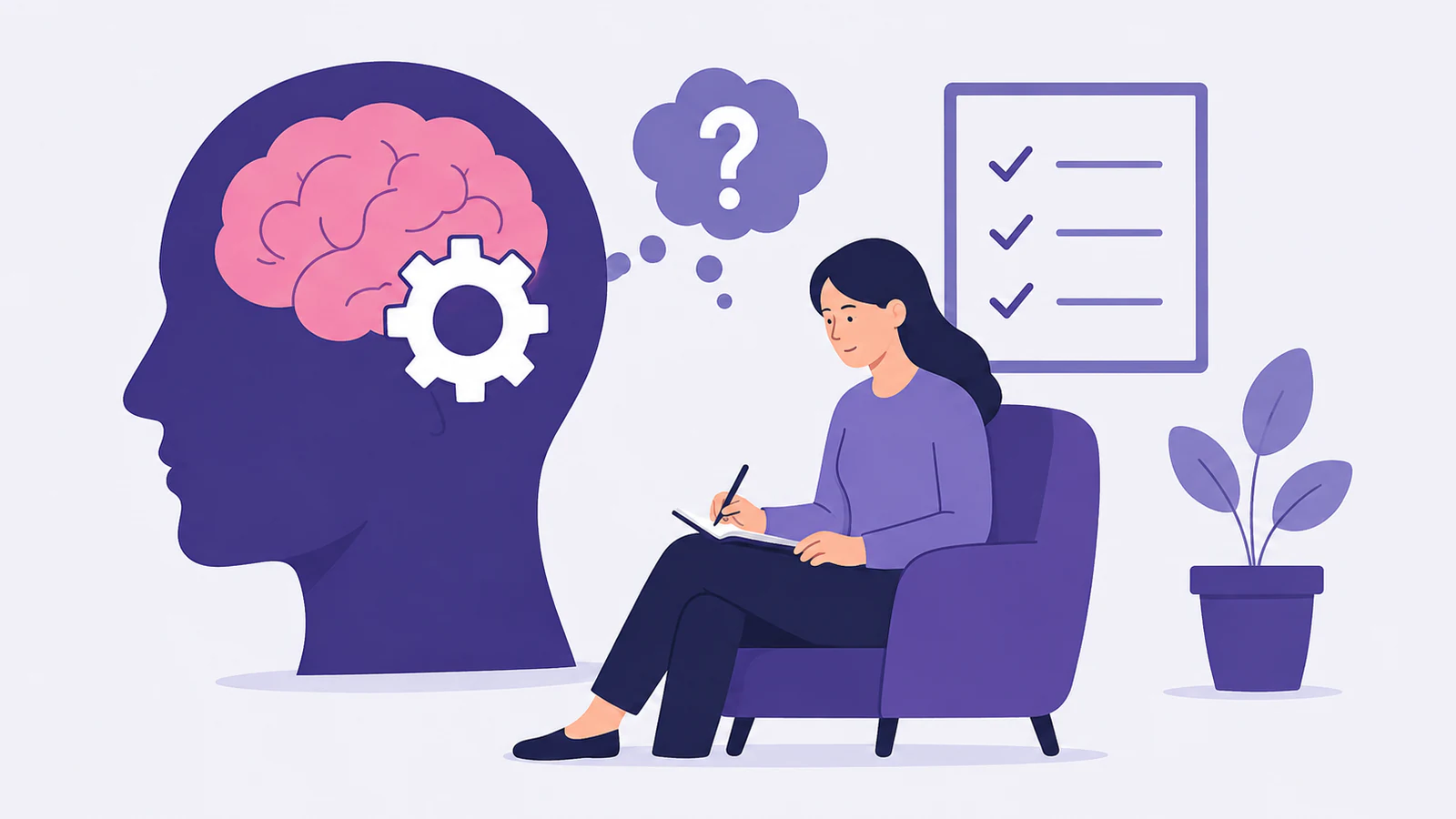
Cognitive behavioural therapy (CBT) is a form of psychotherapy that helps a person understand the relationship between their thoughts, feelings and behaviours, and work on the patterns of thinking and behaving that may worsen psychological symptoms or get in the way of daily life.
CBT is among the most widely studied psychological approaches, and scientific evidence supports its use in a number of mental health conditions, including some anxiety disorders and depression.
The World Health Organization recommends structured psychological interventions based on CBT principles for adults with generalised anxiety disorder or panic disorder, and lists CBT among the psychological interventions recommended for moderate to severe depression.
But is CBT suitable for everyone? How do the sessions work? What are the best-known CBT exercises? And can it be delivered remotely?
In this guide from Well we explain what cognitive behavioural therapy is, the conditions it may be used for, its main techniques and exercises, and when seeing a specialist is better than relying on self-directed exercises.
Please note: this article is for health education and is not a diagnosis or a substitute for a specialist psychological assessment. Choosing the right type of treatment depends on the person's condition, symptoms and health history. You can explore mental health services at Well.
What is cognitive behavioural therapy (CBT)?
Cognitive behavioural therapy is a type of psychotherapy that focuses on the relationship between thoughts, feelings and behaviours.
The way a person interprets a situation can lead to particular feelings; those feelings then affect their behaviour; and the behaviour can in turn reinforce the same way of thinking. For example:
- The situation: someone did not reply to my message.
- The thought: perhaps they do not want to talk to me.
- The feelings: anxiety or sadness.
- The behaviour: withdrawing and avoiding contact.
In CBT the aim is not simply to swap a negative thought for a positive one, but to examine the thought and how accurate it is, look for more balanced alternative explanations, and then try out behaviours that help the person handle the situation more effectively.
NIMH explains that CBT helps a person notice inaccurate or unhelpful thinking patterns, understand their effect on feelings and behaviour, and work on changing the patterns of behaviour that may worsen psychological problems.
How does cognitive behavioural therapy work?
CBT rests on one core idea: that thoughts, feelings and behaviours are connected. That does not mean a person chooses their thoughts or feelings voluntarily; rather, the therapy helps them acquire new skills for understanding these patterns and responding to them differently.
Sessions may involve:
- Identifying automatic thoughts.
- Examining the evidence that supports a thought, and the evidence that does not.
- Recognising unhelpful thinking patterns.
- Trying more balanced ways of interpreting situations.
- Identifying behaviours that worsen or maintain the problem.
- Trying new behaviours gradually.
- Learning skills for handling difficult situations.
Which conditions does cognitive behavioural therapy help with?
Psychotherapy, including CBT, can be used with a range of mental health conditions, but the choice of therapy and how appropriate it is differ according to the diagnosis, the severity of symptoms and the person's needs.
Conditions where CBT may form part of the treatment plan include:
- Anxiety.
- Depression.
- Phobias.
- Schizophrenia.
- Eating disorders.
- Bipolar disorder.
- Post-traumatic stress disorder.
- Obsessive-compulsive disorder.
CBT for insomnia (CBT-I) may also help with postnatal insomnia.
CBT for anxiety
Anxiety is a normal feeling in some situations, but anxiety disorders may involve intense, persistent fear or worry that affects daily life. The World Health Organization recommends structured psychological interventions based on CBT principles for adults with generalised anxiety or panic disorder.
In these cases the therapy may focus on:
- Identifying the thoughts that increase anxiety.
- Understanding the relationship between those thoughts and physical symptoms.
- Learning more effective ways of handling anxiety-provoking situations.
- Using graded exposure where it suits the case.
- Reducing the behaviours that keep you in the anxiety cycle.
CBT for depression
Depression may involve loss of interest, changes in sleep or appetite, low energy, difficulty concentrating, and feelings of sadness or hopelessness. CBT is one of the first-line options for treating depression.
Treatment for depression may focus on:
- Identifying recurring negative thinking patterns.
- Working with thoughts linked to guilt, helplessness or hopelessness.
- Gradually increasing helpful activities.
- Improving problem-solving skills.
- Addressing behaviours that increase isolation or reduce activity.
What are the main CBT techniques?
A specialist uses a range of techniques depending on the case. They rest either on cognitive interventions concerning how a person thinks, or behavioural ones concerning how they act. The best known include:
1. Identifying automatic thoughts
An automatic thought is one that appears quickly when a situation occurs — for example: "I got that wrong, so I must be incompetent."
The specialist helps the person notice this thought and understand its effect, rather than treating it as established fact.
2. Re-evaluating thoughts
Instead of asking "is this thought positive or negative?", more precise questions can be asked:
- What evidence supports this thought?
- What evidence does not support it?
- Is there another explanation for the situation?
- What would I say to someone going through the same thing?
- Am I treating a possibility as a certainty?
The aim is to reach a more realistic and balanced interpretation.
3. Behavioural activation
Behavioural activation is used particularly within the treatment of depression. It focuses on gradually increasing participation in activities that hold value or meaning for the person, rather than waiting for mood to improve first before doing anything. That might be through:
- Appropriate physical activity.
- Social contact.
- Gradually returning to an enjoyable activity.
- Completing small postponed tasks.
- Organising a daily routine.
4. Graded exposure
This may be used within some forms of behavioural therapy for anxiety, fears or other conditions. It involves engaging gradually and systematically with the situations or objects that cause fear, rather than always avoiding them.
But graded exposure is not an exercise to apply randomly to every case; it may need a treatment plan set by a specialist, particularly where symptoms are severe or linked to trauma or obsessive-compulsive disorder.
5. Problem-solving
This approach helps break a problem into smaller steps, identify the available options, compare the likely outcomes, and then choose a practical step that can actually be taken.
What are the best-known CBT exercises?
There are various exercises and techniques associated with cognitive behavioural therapy, and the specialist chooses what suits the case.
The thought record exercise
One of the simplest CBT exercises, based on keeping a straightforward record that includes:
| Element | Example |
|---|---|
| The situation | I did not get a reply to my message |
| The thought | They must be angry with me |
| The feeling | Anxiety |
| Supporting evidence | They have not replied for a while |
| Contradicting evidence | They may be busy |
| Alternative explanation | They may not have been able to reply yet |
| The new behaviour | Waiting rather than sending repeated messages |
Recognising cognitive distortions
After recording the thought, ask yourself: am I falling into one of the unhelpful thinking patterns? For example:
- All-or-nothing thinking: seeing things as complete success or complete failure, with no middle ground.
- Overgeneralisation: turning a single experience into a general rule — "I failed that interview, so I will never succeed in any interview."
- Catastrophising: expecting the worst possible outcome and treating it as the certain one.
- Mind reading: assuming you know what others are thinking without sufficient evidence.
- Fortune telling: assuming a negative outcome will happen without sufficient evidence.
- Emotional reasoning: treating a feeling as proof of fact — "I feel incapable, therefore I really am incapable."
- "Should" statements: setting very rigid rules for yourself, such as "I must always succeed."
Reframing the thought
Once the thought is identified, try to phrase it in a more balanced way. "I always fail" might become: "I faced a situation that did not work out as I expected, and I can work out what to improve next time."
This way of reframing negative thoughts is not an attempt to gloss over reality, but to avoid generalisations the facts do not necessarily support.
Can cognitive behavioural therapy be practised at home?
Some CBT skills and exercises can be learned and used independently, but that does not make self-directed work the equivalent of CBT sessions with a specialist.
Working with a specialist may be more appropriate when:
- Symptoms persist over a long period.
- The problem affects work or study.
- Relationships or daily life are affected.
- You find the skills hard to apply on your own.
- Symptoms are becoming more severe.
- More than one mental health problem is present at the same time.
- Thoughts of self-harm or of not wanting to live appear.
When do you need a specialist rather than exercises?
Psychological exercises can be useful for learning certain skills, but they are not a substitute for assessment when a problem is affecting your life.
It is better to seek a specialist assessment if:
- Symptoms have persisted or increased.
- They have begun to affect work or study.
- They have affected sleep or relationships.
- You have become unable to carry out your usual tasks.
- Anxiety or sadness recurs to a degree that is hard to control.
- You have tried to manage the problem alone without sufficient improvement.
Where there are thoughts of harming yourself or others, or a feeling that you cannot keep yourself safe, that is a situation calling for urgent medical help rather than home exercises.
What happens in a first CBT session?
There is no single identical first session for everyone, but the initial assessment may involve talking about:
- The main problem.
- When the symptoms began and how long they have lasted.
- The situations that make symptoms worse.
- The problem's effect on daily life.
- Relevant psychological and health history.
- The person's goals for treatment.
- The suitable treatment options.
The specialist may then begin setting a treatment plan and goals that can be tracked.
The purpose of the first session is not to test or judge you, but to understand your situation well enough to choose the right intervention.
How long is a CBT session?
A CBT session usually takes around 30 to 60 minutes, but the actual length differs according to the type of problem, the treatment plan and the person's needs. The number of sessions also differs according to the condition, the severity of symptoms and the response to treatment.
How many CBT sessions are needed?
There is no fixed number of sessions for every case. CBT generally ranges from a few sessions to around 20 in some cases, with the plan differing from person to person according to:
- The type of problem.
- The severity of symptoms.
- How long the condition has lasted.
- The goals of treatment.
- The person's response.
- Whether other conditions need treating.
Some guidelines use structured treatment programmes of defined length for particular conditions.
Is CBT suitable for children and adolescents?
Various psychological interventions can be used with children and adolescents, but the choice and the way they are applied differ from adult treatment.
Treatment depends on:
- The child's age.
- Their stage of development.
- The nature of the problem.
- The severity of symptoms.
- The family and school environment.
A child or adolescent should therefore be assessed by a qualified specialist, and the method of treatment should suit their age and needs.
What is low-intensity CBT?
Low-intensity CBT (LI-CBT) is a simplified, less intensive form of cognitive behavioural intervention. It aims to give structured psychological skills and strategies to people experiencing some common mental health problems, with a lower level of therapeutic contact than conventional therapy.
It may rely on structured materials or programmes — booklets, digital content, guided exercises — with limited support or follow-up from a specialist depending on the model used.
"Low intensity" does not mean the therapy matters less or that it suits every case; it refers mainly to how the intervention is delivered and the degree of therapeutic support. This approach is used within mental health programmes, and Saudi Arabia's National Center for Mental Health Promotion has included low-intensity CBT among its professional development programmes in mental health.
Whether this kind of intervention is appropriate is determined by the nature and severity of symptoms and the person's needs, while more complex or severe cases may need more intensive psychotherapy or additional interventions.
Is cognitive behavioural therapy effective?
Yes. Scientific evidence supports the use of CBT in a number of mental health conditions, and the recommendations in the WHO's mhGAP guide indicate that psychological interventions are effective in several conditions, particularly anxiety and depression, and recommend interventions based on CBT principles in specific conditions such as generalised anxiety and panic disorder.
How effective the therapy is may vary according to:
- The nature of the condition.
- The severity of symptoms.
- The specialist's experience.
- How long the problem has lasted.
- The goals of treatment.
- How consistently the person attends sessions and practises.
- The presence of other mental or physical health conditions.
Is CBT better than medication?
Psychotherapy and medication are different options, and one or both may be used depending on the case.
The World Health Organization explains that psychotherapy is among the core treatments for depression, and that psychotherapy and antidepressants can be combined in moderate and severe depression depending on the assessment.
In anxiety disorders there are likewise both psychological and pharmacological options, taking into account the type of disorder, the severity of symptoms, the person's preferences and the availability of appropriate treatment.
For that reason, no psychiatric medication should be started or stopped without consulting the doctor.
What is the difference between CBT and DBT?
The table below sets out the difference between cognitive behavioural therapy and dialectical behaviour therapy:
| Comparison | CBT | DBT |
|---|---|---|
| Name | Cognitive behavioural therapy | Dialectical behaviour therapy |
| Focus | The relationship between thoughts, feelings and behaviour | Emotion regulation, coping skills, acceptance and change |
| Techniques | Re-evaluating thoughts and changing behaviours | Mindfulness, emotion regulation, distress tolerance, communication |
| Use | Multiple conditions according to diagnosis | Used in specific conditions and particular treatment protocols |
Choosing CBT or DBT is not based on the name of the therapy alone, but on assessment of the case, the goals of treatment and the specialist's experience.
How do you get the most out of CBT?
To get the greatest possible benefit from treatment, it helps to:
- Keep to appointments: consistency allows progress to be tracked and the plan adjusted as needed.
- Apply the skills between sessions: the treatment plan may include exercises or observations between sessions.
- Say how you feel: if a particular technique does not suit you, tell the specialist rather than stopping treatment without discussion.
- Set clear goals: having a measurable goal helps show whether the therapy is making progress.
- Be patient with change: changing patterns of thinking and behaviour can take time and practice, and not feeling an immediate improvement does not mean the therapy is not working.
Remote CBT: can sessions be held online?
Yes. Some psychological interventions can be delivered remotely, including formats based on CBT principles.
The World Health Organization notes that CBT-based psychological interventions can be delivered in different formats — in-person sessions, digital or online sessions, and guided or unguided self-help — depending on available resources, the person's preferences and the condition.
Remote sessions may suit people who:
- Prefer the privacy and comfort of home.
- Find travelling difficult.
- Live far from a suitable provider.
- Prefer communicating by video.
But that does not mean remote sessions suit every case; the specialist determines the most appropriate way of delivering treatment based on assessment.
When is the next step to ask for help?
If you are looking for CBT exercises to handle a passing situation, some of the skills described in this article may help you understand your thoughts better.
But if anxiety, sadness, recurring thoughts or behaviours that trouble you are persistent or affecting your daily life, an assessment with a mental health specialist may be a more useful step than relying on self-directed exercises alone.
Well offers mental health services through which you can explore the available options and reach the right specialist.
Explore mental health services at Well and book your session.
Sources
- Cognitive Behavioral Therapy (CBT) | Cleveland Clinic
- Cognitive behavioral therapy | Mayo Clinic
- What is Cognitive Behavioral Therapy? | APA
- Psychological interventions | WHO
- Cognitive behaviour therapy (CBT) | healthdirect
- What Are Cognitive Distortions? | Healthline
- Cognitive Behavioral Therapy for Depression | PMC
- Intensive CBT: How fast can I get better? | Harvard Health
- National Center for Mental Health Promotion (SA)
Frequently asked questions
What is the difference between psychotherapy and cognitive behavioural therapy?
Psychotherapy is a broader term covering a range of therapeutic approaches, while cognitive behavioural therapy is one type of psychotherapy that combines work on thoughts, thinking patterns and behaviours. CBT is distinguished by looking at the relationship between thoughts, feelings and behaviour, and helping a person recognise unhelpful thinking patterns and develop more realistic and effective ways of handling them.
When is CBT not enough on its own?
CBT alone may not be enough in some cases, particularly where symptoms are severe, where multiple disorders are present at the same time, or where a person needs medication or a more specialised intervention. A doctor or qualified therapist determines whether CBT is suitable on its own or is better combined with other approaches.
Does CBT treat obsessive-compulsive disorder?
Yes. CBT is used with obsessive-compulsive disorder, where a person learns to face the situations or thoughts that trigger the obsession gradually, without responding with the compulsive behaviour in the usual way.
What are CBT sessions for addiction?
They are psychotherapy sessions that help a person understand the relationship between the thoughts, feelings, situations and behaviours linked to substance use or addictive behaviour, and then learn more effective ways of handling triggers and cravings and reducing the likelihood of relapse. Sessions may involve identifying triggers, recognising the thoughts that precede the behaviour, developing strategies for high-risk situations, and training in problem-solving and relapse prevention. CBT may form part of a broader treatment programme rather than being the only intervention.
What are CBT exercises for anxiety?
CBT exercises for anxiety differ according to the type of anxiety disorder and the individual case, but may include recording negative thoughts and feelings, identifying automatic thoughts, re-evaluating unhelpful thoughts, graded exposure to anxiety-provoking situations, and learning problem-solving and relaxation skills.
What is the difference between CBT and DBT?
Cognitive behavioural therapy (CBT) focuses on the relationship between thoughts, feelings and behaviour, relies on re-evaluating thoughts and changing behaviours, and is used across multiple conditions according to diagnosis. Dialectical behaviour therapy (DBT) focuses on emotion regulation, coping skills, and acceptance and change, relies on mindfulness, distress tolerance and communication skills, and is used in specific conditions and particular treatment protocols. Choosing between them is not based on the name alone, but on assessment of the case, the goals of treatment and the specialist's experience.
Do I need a psychiatrist or a psychologist?
That depends on your needs. Psychotherapy with a psychologist may suit some cases, while others may need assessment by a psychiatrist, particularly where a medication assessment is needed or the condition is more complex. Specialists may also work together within a single plan.
Can cognitive behavioural therapy be done online?
Yes. Some CBT-based psychological interventions can be delivered online, and whether this format is chosen depends on the case, the person's preferences and the availability of a suitable service.
How many CBT sessions are needed?
There is no fixed number for every case. CBT generally ranges from a few sessions to around 20 in some cases, and the plan differs from person to person according to the type of problem, the severity of symptoms, how long the condition has lasted, the goals of treatment and the person's response.